Welcome to the original website for Royal City Rag.
Royal City Rag started in Guelph in August 2005 as a Tuesday morning mixed music and spoken word (politics and current affairs) show. After a brief stint in the Wednesday 6-7 p.m. slot we found our way to our current home on Saturday mornings from 8-10 a.m.
And now… we’ve split into two different radio shows!
The musical side of Royal City Rag is now known as Folk Roots Radio. We’re still on the air on Saturdays, from 8-10 a.m. on CFRU 93.3fm.
Folk Roots Radio If folk, roots, country and blues are your thing you’ll find them all on Folk Roots Radio. Grab your favourite morning brew and settle down for two hours of music and more to start your Saturday! If you are a musician and you want to play live in the studio, get in touch. We’d love to hear from you.
Our current affairs and politics output is now part of Beyond the Ballot Box. Beyond the Ballot Box takes place on Thursdays from 5-7 p.m. on CFRU 93.3fm.
Beyond the Ballot Box Beyond the Ballot Box is your home for politics and current affairs. You can find us on CFRU 93.3fm in Guelph every Thursday evening from 5-7 p.m. Join us for The Gang of Four roundtable as we humorously tackle the big political stories of the week. Stay with us for one on one interviews and our sister show Accessibility Matters or join us for The Guelph Hour, a roundtable discussion featuring a special guest, dedicated to the Royal City. Beyond the Ballot Box is produced by Jan Hall and hosted by Jan Hall with Oliver Rockside.
On July 12009, Royal City Rag headed out to Riverside Park to celebrate Canada Day on location with storytellers Sya Van Geest and Brad Woods, and singer-songwriter Sam Turton. Despite the poor weather, all turned out sunny on a fun show.
Our storytellers were on fine form; Sya explaining the origin of storytelling and Brad regaling us with his experiences in the cockpit during his first flying lesson.
Sam sang several songs on the show, including another new one, “You’re my home, Canada”, written especially for Royal City Rag. He also threw in a soulful version of O Canada to finish the show.
Unfortunately we had to beat a hasty retreat at the end of the show after Brad got a bit carried away helping out with the firework display.
Catch the show if you missed it. It was a great one!
We’ll be back with another live show, this Saturday from 8-10 a.m. on CFRU93.3fm.
Music:
Sam Turton, What’s So funny About Peace, Love And Understanding? (Live) Sam Turton, Annapolis Farm (Live) Sam Turton, Right Here (Live) Sam Turton, You Are My Home, Canada (Live)
Sam Turton, O Canada (Live)
Storytelling:
Sya Van Geest, The Birth Of Stories
Brad Woods, Flying Lessons
Royal City Rag will be taking a much needed rest this winter. CFRU’s Migrant Matters will be filling our time slot on December 11 and 18. Thanks to Mary-Carl for helping us out.
We’re expecting to be back on the air on January 8.
In the meantime, please take advantage of our archive.
Don’t forget to support local business and Guelph’s great artisans this holiday season!
Royal City Rag on December 4 will have a distinctly seasonal theme and lots of guests.
John Huston As Charles Dickens
Charlie Cares from Ground Floor Music will be joining us during the first hour to chat about “A Christmas Carol”, a dramatic tour de force featuring John Huston portraying Charles Dickens as he tells his classic yuletide tale. The show takes place at St. James The Apostle Anglican Church in Guelph on December 7.
A Christmas Carol… As Told By Charles Dickens
St. James The Apostle Anglican Church, 86 Glasgow St. N., Guelph, ON
Tuesday, December 7 at 8.00 p.m. (doors open at 7.30 p.m.)
Tickets: $20 at the door/$18 in advance from Ground Floor Music, 13 Quebec St., Guelph, ON, 519-827-1444 info@groundfloormusic.ca
Later in the hour we’ll be touching base with Marie Zimmerman, Exectutive Director of the Hillside Festival as the first tickets for Hillside Inside go on sale. Hillside Inside takes place February 4-5 2011 at a variety of downtown venues. Artists announced so far include summer 2010 favourites Sarah Harmer, Matt Andersen and Shane Koyczan. Tickets go on sale this coming Saturday, December 4, 2010 at 9.00 a.m. from Hillside ticket outlets Ground Floor Music in Guelph, Encore Records in Kitchener and Soundscapes in Toronto as well as online via TicketPro.
In the second hour of the show Simon Irving, Artistic Director of the Guelph Symphony Orchestra will be joining us to chat about the GSO’s seasonal concerts. “Christmas Choral Fantasy” with the Grand River Chorus, takes place on Sunday December 12 2010 at 3 p.m. at River Run Centre with conductor David Bourque. The Christmas offering is a blend of classics and festive seasonal music. Beethoven’s Choral Fantasy, with the Grand River Chorus and Amy Wark (piano) is the major work, together with the dazzling opening chorus from Bach’s “Christmas Oratorio”, and Brahms’ “Christmas Day”. There will be lots of carols and opportunities for audience sing-along and the King George School choir will add to the festivities. Delightful music for the season, with something for everyone!
The GSO complete their seasonal offerings with “Dreams of Vienna” on New Year’s Day, Saturday January 1, 2011 at 3 p.m. at River Run Centre with conductor candidate Michael Newnham. This annual GSO Viennese-style musical feast is now a popular Guelph New Year’s Day tradition. Two terrific soloists give double the pleasure! – Guelph’s own soprano Donna Ellen Trifunovich, now resident in Vienna with the State Opera, and mezzo Julie Nesrallah, of CBC fame. These duelling divas will be a lot of fun! And the orchestra plays waltzes, marches and polkas, complete with elegant dancers gliding over the stage.
Wassail!
To wrap up the show Rick and Judy Avery from local acoustic group Relative Harmony will join us to play live in the studio. Relative Harmony will be taking part in “Wassail!”- a celebration of old-fashioned Christmas and solstice traditions taking place at Harcourt Memorial United Church on December 4 at 7.30 p.m. Wassail! has been charming audiences in London Ontario for over twenty years. The show features traditional songs and carols sung, elegant English dances and rollicking Morris dancing accompanied by live music, a mummers’ play as well as seasonal readings from Jane Austen and Thomas Hardy. Advance tickets can be purchased from Ground Floor Music on Quebec Street for $18.00, Students and seniors $13.00.
And wrapping up that seasonal theme, don’t forget that the Guelph Youth Singers annual concert, This Frosty Tide, takes place at St. George’s Anglican Church on December 4 at 7.30 p.m. Traditional carols in beautiful choral arrangements will mix with songs of frosty winter. Guest soprano soloists, Marion Samuel-Stevens and Sandra Tucker, will add to the concert with solos including Mozart’s “Exultate Jubilate,” Adolph Adams’ classic, “O Holy Night” and Pietro Yon’s “Gesu Bambino”–the last two accompanied by beautiful children’s voices.
This Frosty Tide
St. George’s Anglican Church
Saturday, December 4 at 7.30 p.m.
Tickets: River Run Centre box office, 519-763-3000.
Adults $25 / Students & Seniors $19/eyeGO.org
Remember if you don’t catch Royal City Rag live, you can always pick it up later that day via the CFRU archive or on this website a day or so later.
The fourth edition of Hillside’s winter festival, Hillside Inside, is taking shape. 2011’s indoor festival takes place from February 4-5 2011 and this year moves from the Sleeman Centre to a variety of downtown Guelph venues.
As usual, it promises to provide a great winter fix for those who can’t wait for the summer festival to come around again.
This year there will also be some Hillside style workshops, including a songwriting workshop, on Saturday February 4 from 10.00 a.m. – 2. 00 p.m. and craft workshops where you can make gifts for Valentine’s Day (TBD).
After a SIX year hiatus the Ground Floor Music Concert Series returns on December 7 with a reprise performance by John Huston portraying Charles Dickens, as he tells his classic yuletide tale, “A Christmas Carol” at St. James The Apostle Anglican Church in Guelph.
This is NOT a reading, nor a recitation, but a dramatic tour de force. In the guise of the famous Victorian author, professional stage actor Huston performs a dramatic retelling of Dickens’ A Christmas Carol exactly as the author himself used to do during his popular lecture tours. Between the story’s scenes, a small group of choristers will perform a half-dozen carols of the period.
If you have an interest in drama, literature or storytelling you really should see this show.
“Huston is a consummate storyteller… mesmerizing.” – Winnipeg Free Press
“A one man powerhouse performance.” – Globe and Mail
“His character voices are nuanced and colourful, his sense of the dramatic excellent.” – Ottawa Citizen
“Huston is a masterful narrator… an unusually fine performance.” – Robert Enright, CBC Radio
“Absolutely Fabulous… brings the work to life. Magnificent.” – Alvina Ruprecht, CBC Radio
A Christmas Carol… As Told By Charles Dickens
St. James The Apostle Anglican Church, 86 Glasgow St. N., Guelph, ON
Tuesday, December 7 at 8.00 p.m. (doors open at 7.30 p.m.)
Tickets: $20 at the door/$18 in advance from Ground Floor Music, 13 Quebec St., Guelph, ON, 519-827-1444 info@groundfloormusic.ca
Charlie Cares from Ground Floor Music will be our special guest on Royal City Rag on December 4 between 8-9 a.m.
Remember, if you don’t catch Royal City Rag live, you can always pick it up later that day via the CFRU archive or on this website a day or so later.
Guelph Symphony Orchestra celebrates its 10th Anniversary season, featuring five concerts and five guest conductors . One of these will be selected as the new resident conductor of the GSO, starting in the 2011-12 season. Audience members are invited to contribute to the selection process, through a survey available after each concert!
“Christmas Choral Fantasy” with the Grand River Chorus, will be performed on Sunday December 12 2010 at 3 p.m. at River Run Centre with conductor David Bourque. The Christmas offering is a blend of classics and festive seasonal music. Beethoven’s Choral Fantasy, with the Grand River Chorus and Amy Wark (piano) is the major work, together with the dazzling opening chorus from Bach’s “Christmas Oratorio”, and Brahms’ “Christmas Day”. There will be lots of carols and opportunities for audience sing-along and the King George School choir will add to the festivities. Delightful music for the season, with something for everyone!
For more information, visit the Guelph Symphony Orchestra website, www.guelphorchestra.ca
Guelph Symphony Orchestra Christmas Choral Fantasy
Sunday December 12, 2010 at 3 p.m.
River Run Centre, Guelph
Tickets: River Run Centre box office, 519-763-3000.
Simon Irving, Artistic Director with the Guelph Symphony Orchestra will be one of our guests during the second hour of Royal City Rag (9-10 a.m.) on Saturday December 4 on CFRU93.3fm.
Remember if you don’t catch Royal City Rag live, you can always pick it up later that day via the CFRU archive or on this website a day or so later.
Royal City Rag will be back on CFRU 93.3fm this coming weekend with a busy show featuring a follow up interview with Guelph M.P. Frank Valeriote (complete with his Movember moustache) and a visit from The Working Week‘s Scotty Hertz to update us on the Wood’s Site/Downtown redevelopment plan and the 2nd Canadian Labour International Film Festival taking place at the Guelph and District Labour Council, 141 Woolwich Street, (Matrix Building, Woolwich and Eramosa) on November 28 at 2.00 p.m.
Later in the show we’ll chat by phone with Linda Beaupre Conductor and Artistic Director of the Guelph Youth Singers about their annual seasonal concert This Frosty Tide at St. George’s Anglican Church on December 4 at 7.30 p.m.
As usual we’ll wrap it all up with some great music. It promises to be a great show; you won’t want to miss it!
Remember if you don’t catch Royal City Rag live, you can always pick it up later that day via the CFRU archive or on this website a day or so later.
Guelph Youth Singers present their annual seasonal concert This Frosty Tide at St. George’s Anglican Church on December 4 at 7.30 p.m.
Traditional carols in beautiful choral arrangements will mix with songs of frosty winter. Guest soprano soloists, Marion Samuel-Stevens and Sandra Tucker, will add to the concert with solos including Mozart’s “Exultate Jubilate,” Adolph Adams’ classic, “O Holy Night” and Pietro Yon’s “Gesu Bambino”–the last two accompanied by beautiful children’s voices.
The 76 choristers, aged six through 18, will be accompanied throughout the evening by instrumentalists on flute, violin, percussion, tone chimes, other percussion, and, of course, organ and piano. This is a heartwarming evening for the entire family.
Founded in 1991 and now celebrating its 20th year, Guelph Youth Singers has reached national prominence through provincial and national awards at the Canadian Federation of Music Festivals. They have released three CDs of their work including a brand-new anniversary release entitled Into the Breeze.
GYS is always looking for new choristers who love to sing. Choristers enjoy the chance to learn to sing well, to read music, to do drama workshops, to perform…and to enjoy the company of other talented youth. Auditions are now being scheduled for entry into January 2011 season. Audition appointments are designed to give the child a “mini lesson” and an enjoyable experience. Singers are invited to enter the choir in September and in January. Prospective choristers and their parents are welcomed to contact the GYS office at 519-821-8574 for more information, to watch a rehearsal, or to register for an audition.
This Frosty Tide
St. George’s Anglican Church
Saturday, December 4 at 7.30 p.m.
Tickets: River Run Centre box office, 519-763-3000.
Adults $25 / Students & Seniors $19/eyeGO.org
Linda Beaupre, Conductor and Artistic Director of the Guelph Youth Singers will be one of our guests during the second hour of Royal City Rag (9-10 a.m.) on Saturday November 27 on CFRU93.3fm.
Remember if you don’t catch Royal City Rag live, you can always pick it up later that day via the CFRU archive or on this website a day or so later.
The 2nd Canadian Labour International Film Festival will be coming to Guelph on November 28 for a special Festival-in-a box screening at the Guelph and District Labour Council, 141 Woolwich Street, (Matrix Building, Woolwich and Eramosa) starting at 2.00 p.m.
CLiFF aims to increase awareness about labour issues worldwide by screening short films about workers and the conditons under which they live in over 50 locations across Canada about workers and the conditions under which they live and work.
Twenty-two Canadian and international films have been selected for the festival, nine are Canadian, four American, two British, and one each from Australia, Egypt, India, Pakistan, Singapore, Turkey and the Netherlands.
The featured films to be shown in Guelph are:
The Union Song (2010). A short video featuring a bluegrass song about how all members of the education community work together to keep the public school system strong (3 minutes).
DIRECTOR: Daniel Fewings
PRODUCER: Daniel Fewings, Canada
The Delano Manongs – Forgotten Heroes Of The UFW (Trailer, 2010). The story of farm labour organizer Larry Itliong and a group of Filipino farm workers who instigated one of the American farm labour movement’s finest hours – The Delano Grape Strike of 1965 that brought about the creation of the United Farm Workers Union (UFW). While the movement is known for Cesar Chavez’s leadership and considered a Chicano movement, Filipinos played a pivotal role that began it all. Filipino labour organizer, Larry Itliong, a five foot five cigar-chomping union veteran, organized a group of 1500 Filipinos to strike against the grape growers of Delano, California (6 minutes 57 seconds)
DIRECTOR: Marissa Aroy
PRODUCER: Niall McKay, USA
Neoliberalism As Water Balloon (2009). A DIY experiment illustrating the impact of neoliberal economics on class, race and gender equality (12 minutes)
DIRECTOR: Tim McCaskell
PRODUCER: Richard Fung, Canada
Work In Progress (2009). The life of an injured worker is seen through her challenges, both personal and the bureaucratic (11 minutes 33 seconds)
DIRECTOR: Chavisa
PRODUCER: Chavisa, Canada
Special Pass (2009). A documentary about a group of foreign workers in Singapore who attempt to seek shelter and support themselves while out of work. This is the lesser-known story of foreigners who receive little support in a country that, ironically, was built by the work of immigrants (24 minutes).
DIRECTOR: Vicknesh Varan
PRODUCER: Rupture Films, Singapore
The Curious Case Of The Missing Recovery (2010). “Stanfordo” searches far and wide for answers to a mystery that continues to baffle hard-working Canadians. How can the federal government and Bank of Canada proclaim an economic recovery when hundreds of thousands of workers are still jobless, and millions are still reeling from one of the worst downturns since the Great Depression? (13 minutes 25 seconds)
DIRECTOR: Michael Connolly
PRODUCER: CAW, Canada
Silent Voices: Home-based Women Workers In Pakistan (2010). The stories of home-based women workers in Pakistan, told in a gritty and realistic style (14 minutes)
DIRECTOR: Aisha Gazdar
PRODUCER: Films D’Art, Pakistan/France
Sudden Wake (2009). The story of the struggle of Egypt’s first independent trade union – the Real Estate Tax Authority Union (RETA). RETA was formed in December 2008, one year after tax collectors there held a two-week sit-in in front of the Cabinet Building. They face constant harrassment from the Egyptian government as well as the country’s official labour federation, the ETUF.
DIRECTOR: Mahmud Farag
PRODUCER: Hamza Ashraf, Egypt
Red Dust (2010). The incredible story of resistance, courage and hope by women workers in China battling cadmium poisoning and demanding justice from the local government and their employer, a multi-national battery manufacturer (20 minutes).
DIRECTOR: Karin T. Mak
PRODUCER: Karin T. Mak, USA
Scotty Hertz, host of The Working Week on CFRU 93.3fm and one of the organizers of the CLiFF Guelph screening will be one of our guests on Royal City Rag during our second hour on Saturday November 27 (9-10 a.m).
Remember if you don’t catch Royal City Rag live, you can always pick it up later that day via the CFRU archive or on this website a day or so later.
Guelph audiences have a one-time opportunity on December 4 to experience the joy of “Wassail!”- a celebration of old-fashioned Christmas and solstice traditions that has been entertaining London (Ontario) audiences for 20 years.
The show features traditional songs and carols sung by a 13-member choir, elegant English dances and rollicking Morris dancing accompanied by live music, a mummers’ play, seasonal readings from Jane Austen and Thomas Hardy, and a special guest appearance by local Guelph acoustic folk group Relative Harmony.
The concert takes place at Harcourt Memorial United Church on December 4 at 7.30 p.m. Advance tickets can be purchased from Ground Floor Music on Quebec Street for $18.00, Students and seniors $13.00.
Royal City Rag has two sets of two tickets to give away for the show by Lights (with special guests, Michou) at Cowboys on Wyndham Street on November 26. A third set of two tickets has already been claimed by Gerry D. Tickets are the all-ages show are $25 each and available via all Ticketmaster outlets.
If you’d like the tickets all you need to do is drop us a line to info@royalcityrag.ca.
Twenty-two year-old Toronto singer and multi-instrumentalist LIGHTS has been crafting unique, otherworldly synth-pop since she was 14. LIGHTS’ songs have already garnered over 22 million plays on MySpace, and she has racked up a #1 hit on MuchMusic, inclusion in a series of Old Navy commercials, and airtime on The Hills. On the strength of her 2008 self-titled EP alone, LIGHTS won the 2009 Juno Award for New Artist of the Year, joining the ranks of Feist and Nelly Furtado.
Raised in the Philippines and Jamaica, LIGHTS finally settled in Timmins, Ontario. In her bedroom, dubbed Starry Night Studios, she began experimenting with her sound. At first it was just her and a guitar, then she moved on to drums, piano, and then the keyboard. LIGHTS became fascinated with the limitless possibilities synthetic instruments could offer and began to create her “inter-galactic electro“ sound, which she describes as “simple lyrics juxtaposed with sounds harvested from the far reaches of my alternate universe.”
LIGHTS’ first full-length collection of music, The Listening, expanded on that sound. The album includes a few songs already familiar to die-hard LIGHTS fans, as well as plenty of new material. “Saviour”, a propulsive pop anthem that represents the essence of LIGHTS, and “Ice”, an 80’s-influenced, irresistibly catchy crowd-pleaser, are standouts. The Listening was released to critical acclaim in North America in fall 2009. Rolling Stone called LIGHTS a “retro new wave…keytar-rocking pixie,” Billboard declared, “[The Listening] comes on like a more accessible version of the current buzz-worthy wave of U.K. electronic artists including Little Boots and La Roux. Exuberant…irresistibly catchy,” and the Toronto Star praised her as “the very epitome of D.I.Y. pin-up cool.”
LIGHTS was also selected as an inaugural artist for MySpace’s new Introducing program, and she stars in her own short-form motion-comic series Audio Quest: A Captain LIGHTS Adventure, which aired on MTV and MTV.com. In fall 2009 she wrapped a North American headline tour, which included sold-out performances at New York’s Mercury Lounge and the Troubadour in Los Angeles. Most recently, LIGHTS completed a 6 week, sold-out, international tour with Owl City, as well as select dates on this summer’s Lilith Fair tour.
Don’t miss Lights when she performs at Cowboy’s on November 26!
We’re taking a break from Royal City Rag this weekend for a well-earned rest. CFRU’s Migrant Matters will be filling our time slot this week. Thanks to Mary-Carl for helping us out.
We’ll be back on the air again November 27 when Guelph MP Frank Valeriote, complete with his Movember mustache, will be our guest.
In the meantime, please take advantage of our archive. We’ll be kickstarting the blog again next week and expect to be back on the air next weekend.
Guelph artist Sarah Elaine Quick has an opening reception at the Red Brick Cafe on Douglas Street, Downtown Guelph this evening, Saturday November 13 at 7.00 p.m. The exhibition runs till the end of the year. Check out the portrait of Guelph singer-songwriter Tannis Simmon, one of Royal City Rag’s favourites at the back of the exhibtion space!
Also, don’t forget that the fourth edition of the winter season songfest Wintersong featuring Tannis Slimmon with Jude Vadala and Katherine Wheatley take place on Saturday, December 4, 2010 at 8.30 p. m. and Sunday, December 5, 2010 at 2.00 p.m. The shows take place at Folkway Music,163 Suffolk Street West Guelph, Ontario. To reserve tickets or more info, call 519- 824-5524 or 877-763-5524 (toll free) or e-mail info@folkwaymusic.com.
We have a busy, recreation-based, Royal City Rag planned for CFRU 99.3fm this Saturday morning, November 13 between 8-10 a.m.
In the first hour, we’ll be talking to Jack Frimeth about the Reel Paddling Film Festival. The Centre Wellington DHS Aboriginal Program presents the 5th Annual Reel Paddling Film Festival at the E.L. Fox Auditorium (JF Ross CVI), 22 Meyer Dr., on Saturday, November 13, 2010 at 7.30 p.m. (doors open at 7 p.m). Tickets: Advance from the Bookshelf – $10/ Door – $15.
With 37 inspiring paddling films short-listed for the World Tour, including the nine festival category winners, audiences can expect to see hairy whitewater action, sea kayakers exploring remote coastlines, coast-to-coast canoe expeditions, international river travel films, motivating environmental documentaries, grueling kayak fishing battles and hilarious short films capturing the lighter side of paddling life. The Guelph show will also include a segment devoted to family paddling as well as an hour long environmental segment focusing on waterways that are soon to be dammed.
Later in the hour, Carin Headrick from Guelph Barrier Free Committees will be joining us again with an update on the activities of the accessibility focused committee. One of their current projects is to find out what recreational activities are available to help people with disabilities participate in recreationwithin the community. Since the focus of the committees is activities that are not run by the city, they are interested in recreation provided by gyms, churches and clubs, etc.
They plan to survey people with disabilities to find out what recreational activities they would like to get involved in. Are you looking for sledge hockey? What about wheelchair basketball, Goalball or curling? They are also interested in knowing what barriers people with disabilities have encountered in participating in sports and other recreational activities. Feedback can be sent to headrick2001@rogers.com.
Company Blonde
In the second hour, we’ll be discussing the first Guelph Contemporary Dance Festival‘s first performance of the season, a free one-hour performance on November 16, 2010 at 12.00 noon in the University Centre courtyard at the University of Guelph featuring Toronto’s Company Blonde.
Company Blonde specializes in creating dance works that are accessible to audiences of all ages blending comedy and theatre with classical modern dance. Company Blonde strives to tell stories and share experiences that speak to our community and our culture, while always keeping the audience at the forefront of their work.
To wrap up the show, we’ll have a studio visit from singer-songwriter Kevin Morse and storyteller Brad Woods. Kevin has a CD release show at The Roxy in Acton on November 27 that will also feature some stories from Brad.
And, as a special treat… we’ll also be giving away 3-pairs of tickets to twenty-two year-old Toronto singer and multi-instrumentalist Lights‘ all-ages show (with Windsor based folk-pop act Michou), at Cowboys Bar. 166 Wyndham St in Guelph on November 26.
Phew! Promises to be a great show. You won’t want to miss it!
Royal City Rag, Saturdays 8-10 a.m. on CFRU93.3fm in Guelph. Remember if you don’t catch Royal City Rag live, you can always pick it up later that day via the CFRU archive or here, on the blog, a day or so later.
Singer-songwriter Royal Wood is back in Guelph on November 24 for a show at Dublin Street United with special guest, Vancouver based pop/roots performer, Hannah Georgas.
Royal is currently on a Canadian headline tour in support of his latest recording, The Waiting. The album appropriately begins with a song entitled “You Can’t Go Back.” Based on the success of his career to date, who can argue with that. One of the hot acts at this year’s Hillside Festival, its pleasing to see that Wood finds time to come back to the Royal City on each tour.
“This record is about the duality of life and how at times, I seemingly waited for the mirrored experience to return,” says Wood. “I went through so many severe shifts personally and all of that turbulence led to serious thought and reflection. That is why these songs were born and why they are my most personal and introspective to date.”
Royal Wood’s voice, songwriting and musical prowess has caught the ear of Pierre Marchand and led to Wood’s decision to let others into his creative universe. On previous albums (Lost And Found EP, A Good Enough Day, Tall Tales, and The Milkweed EP), Wood self-produced, arranged and played the vast majority of the instruments. Pierre Marchand, a heavy hitter best known for his work with Sarah McLachlan and Rufus Wainwright, produced three of The Waiting’s tracks. “I wanted someone who was going to push me artistically, get me out of my comfort zone”.
Through word of mouth, critical acclaim and impressive musical achievements, Royal Wood is quickly gaining an international audience. He has toured Europe, the UK and the United States. He was named iTunes’ Songwriter of the Year, supported national tours with David Gray, Serena Ryder and Sarah Slean and landed song placements in TV shows like Grey’s Anatomy and Private Practice.
A mid-week show it may be, but at a very reasonable cost for tickets, you won’t want to miss it. Catch him while you can!
Royal Wood With Special Guest Hannah Georgas
Wednesday, November 24 at 8.00 p.m. (Doors 7.30 p.m.)
Dublin Street United Church
68 Suffolk St West, Guelph
Advance tickets $18 general, $14 U of Guelph students on sale at Ground Floor Music
Out of town ticket reserves at milanovichlil@hotmail.com
We’re dedicating the whole of CFRU 93.3fm’s Royal City Rag on November 6 to Our Environmental Future, a symposium taking place this coming Wednesday, November 10 from 4.30 p.m. – 10.30 p.m. in the Thornborough Building Rm 1200 at the University of Guelph.
Peter Victor, York University Professor, Managing Without Growth – Yes We Can
Evan Fraser, University of Guelph, Empires Of Food And The Rise And Fall Of Civilizations
Robert Rapier, Peak Oil Expert, Peak Oil What? When?
Mike Nickerson, Executive Director of The Sustainability Project, Life, Money and Illusion: Living On Earth As If We Want To Stay
Jennifer Sumner, Ontario Institute for Studies in Education at the University of Toronto, Effects of Growth On Communities
The series of lectures will be followed by a panel discussion and an opportunity for questions from the audience.
Catch Maggie Laidlaw, Sally Ludwig Norah Chaloner and Mike Nickerson on CFRU 93.3fm’s Royal City Rag between 8 -10 a.m. on November 6. Real voices, real people, real coverage, real community, CFRU 93.3fm.
We were broadcasting from the basement at CFRU 93.3fm on October 30. All part of the station’s fundraising drive, Raise Your Voice, apparently. Evidently I hadn’t raised enough money. Fortunately some good folk from radioland bailed me out however we could still do with some more pledges. If you enjoy Royal City Rag, please consider donating to CFRU 93.3fm during our on-going fundraising drive, Raise Your Voice. As with every funding campaign, CFRU has a specific purpose in mind for the money raised. The station’s monetary goal for 2010 is $15 000, and will be aimed at getting more portable recording equipment, updating the CFRU website, and building the station’s capacity for spoken word content.
At the start of the first hour, we talked to Tristan Dineen about the Canada-Bolivia conference and solidarity event: “Canada-Bolivia Relations in the Next Decade” taking place at the University of Guelph on Saturday, November 6 in McNaughton room 113 at the University of Guelph. The conference runs from 9.30 a.m. until 5.30 p.m. and features guest speaker Hugo Salvatierra Gutierrez, former Bolivian Minister for Rural Development, Agriculture and the Environment in the Evo Morales government and Judy Rebick with an evening of traditional Bolivian culture to follow.
Later in the first hour, Jude Vadala joined us to talk about her new CD, Do You Ever and the launch release taking place on November 6 at the Guelph Little Theatre at 8.00 p.m.
Jude, currently a member of the “WinterSongs” trio with well-known singer-songwriters Tannis Slimmon and Katherine Wheatley, has been involved in the Guelph music scene for over 30 years. She was a member of The Bird Sisters with Tannis Slimmon and Sue Smith. She has produced four albums (Flo, Different Stories, She and She and She and Angel Songs) and has worked on 50 musical projects with artists which also include: James Gordon, Harri Palm, Jah Youssouf, Lewis Melville, Lynn Miles and Suzie Vinnick.
Jude’s band for this CD release concert features Sam Turton, Jane Lewis, Jesse Turton, Sam Cino with special guests Jane Ellenton, Rob Kerr, Lewis Melville, Tannis Slimmon, The Harmony Honeys. The support act will be The Hoofbeats.
Jude Vadala and Band – CD Release
Saturday November 6, 2010 at 8 p.m.
Guelph Little Theatre, 176 Morris Street, Guelph
Tickers: $20
AVAILABLE AT THE DOOR OR AT:
The Bookshelf, 41 Quebec Street,
Wild Rose Consignment Shop, 23A Macdonnell St.,
Ground Floor Music, 13 Quebec St. (cash only).
This is a licensed event. Partial proceeds to the “Steve Potter Gift of Music”
Finally to wrap up our first hour, Magee McGuire from Guelph-Wellington Health Coalition joined us on the phone to chat about their townhall meeting on November 2 in War Memorial Hall at the University of Guelph regarding the impact of private health insurance on Medicare and featuring guest speaker Marie-Claude Premont.
Politics Medicare And The Law: Chaoulli v. Quebec
Tuesday, November 2, 2010 at 7.00 p.m.
War Memorial Hall
(Corner of College Avenue and Gordon Street, Guelph, Ontario)
Listen To The Show:
Music:
Alice Cooper, Hello Hurray from Billion Dollar Babies
Henry Hall And His Orchestra, Hush, Hush, Hush Here Comes The Bogeyman
Jude Vadala, Cross Over My Mind from Do You Ever
Jude Vadala, Little Bird from Do You Ever
Jude Vadala, Molly from Do You Ever
Dave Rawlings Machine, I Hear Them All from A Friend Is A Friend
It’s that time of year of year again. CFRU’s funding drive “Raise Your Voice” runs from October 23 to October 31.
CFRU 93.3fm is a Campus and Community Radio Station that broadcasts 75 different shows in multiple languages 24 hours a day, 365 days a week. With a hefty volunteer base that includes students, business owners and a variety of citizens who donate their time to make the station run smoothly, CFRU has been on the FM dial for thirty years.
As Guelph’s alternative media source, CFRU proudly plays local and Canadian music, as well as genres of music that tend to stay far away from Billboard charts. The station itself is located on the second floor of the University Centre at the University of Guelph.
CFRU receives most of its funding through student levies and fundraising activities, such as the “Raise Your Voice” drive. It does not operate like typical commercial radio programs where corporations use their stations as sources for advertising revenue. Instead, CFRU is limited by the CRTC as to how many advertisements can be played, leaving more broadcast time for great music and unique shows.
As with every funding campaign, CFRU has a specific purpose in mind for the money raised. The station’s monetary goal for 2010 is $15 000, and will be aimed at getting more equipment, updating the CFRU website, and building the station’s capacity for spoken word content. Specifically, CFRU requires a user-friendly production board that will give volunteers the opportunity to be involved in the technical aspects of the station with ease.
Why Should You Support CFRU?
The station gets NO corporate funding.
All our programmers are volunteers.
We do not bombard you with silly ads!
The station supports independent bands and labels, local and Canadian musicians and artists.
How To Pledge
Call us at 519-837-CFRU (2378) to announce your pledge between October 23-31 or e-mail us at info@royalcityrag.ca and we’ll set it all up for you.
How To Pay Your Pledge
When you pledge you will also receive Thank You gifts from us (see the incentive scale below).
You can donate to CFRU by CHEQUE, PAYPAL (via the www.cfru.ca website) or CASH.
PLEASE NOTE: We cannot accept payment by credit card although you can use your credit card for PAYPAL. As we are not a registered charity we cannot give out tax receipts.
How To Donate By CHEQUE
Make your cheque out to “CFRU FM”
DROP IT BY THE STATION: You can come by the station to give it to us. We are located on the second floor, of the University Centre, just off Gordon Road, north of Stone road in Guelph. The station is open to visitors from 9 a.m. till 7.00 p.m. each weekday.
MAIL THE CHEQUE: You can mail the cheque to: CFRU 93.3FM, U.C Level 2, University of Guelph, Guelph, Ontario, N1G 2W1. If you have a favorite show or, shows you wish to pledge the money to specifically, be sure to let us know which shows you are supporting. Please note: if you wish to have your gift(s) mailed to you, there will be shipping charges.
How To Donate By PAYPAL
Follow the PayPal link located on the front page of CFRU homepage at www.cfru.ca.
How To Donate By CASH
You can come by the station to give it to us. We are located on the second floor, of the University Center, just off Gordon Road, north of Stone road in Guelph.The station is open to visitors from 9 a.m. till 7.00 p.m. each weekday.
Incentives: This Is What You Get When You Donate To CFRU
$5.00 Sticker (new design!) and a button
$25 – $49 CFRU Membership and a CD of your choice
$50 – $89 CFRU Membership, CFRU t-shirt (NEW DESIGN!), choice of a CD
$90 – $124 CFRU Membership,CFRU hoodie (NEW DESIGN!), choice of 2 CDS
$125 – $250 CFRU Membership, Choice of Hoodie or t-shirt, choice of 4 CDs and special prizes!!!
If you love what we do on Royal City Rag, we’d love to hear from you. Pledge your support for Guelph’s audio alternative today. Catch the special “Raise Your Voice” Royal City Rag shows on CFRU 93.3fm on October 23 and October 30 from 8-10 a.m.
Real voices, real people, real coverage, real community, CFRU 93.3fm.
Significant changes have taken place in Bolivia since the election of Latin America’s first peasant-indigenous President, Evo Morales. in 2006. In addition to approving a new constitution that establishes the continent’s first plurinational democratic state, Bolivia was the site of the World People’s Conference on Climate Change and the Rights of Mother Earth held last April 2010.
A Canada-Bolivia conference and solidarity event: Canada-Bolivia Relations in the Next Decade will be taking place here at the University of Guelph on Saturday, November 6. This is a unique opportunity to experience and understand the impact this has had on the people of Bolivia.
The special guest speaker for the event will be Hugo Salvatierra Gutierrez, former Bolivian Minister for Rural Development, Agriculture and the Environment in the Evo Morales government and director of ALAS (the Office for Legal Advice and Social Advocacy), an office that works with labour, peasant and indigenous organizations in Santa Cruz, Bolivia.
Canada-Bolivia Relations In The Next Decade
Saturday, November 6 from 9.30 a.m. and until 5.30 p.m.
McNaughton Room 113 at the University of Guelph An evening of traditional Bolivian culture to follow.
Guelph Wellington Health Coalition are presenting a townhall meeting on November 2 in War Memorial Hall at the University of Guelph regarding the impact of private health insurance on Medicare featuring guest speaker Marie-Claude Premont.
Marie-Claude Prémont is a law professor at École Nationale d’Administration Publique in Montréal, (National Public Administration School) . As well as being a member of the Quebec Bar Corporation of Quebec, she teaches and does research in the field of Health Law and Municipal Governance. She has been closely following the impact of the Chaoulli 2005 Supreme Court decision concerning private health insurance and delivery. What does this mean for Medicare and the sustainability of the Canada Health Act?
Politics Medicare And The Law: Chaoulli v. Quebec
Tuesday, November 2, 2010 at 7.00 p.m.
War Memorial Hall
(Corner of College Avenue and Gordon Street, Guelph, Ontario)
Jude Vadala releases her 5th album “Do You Ever” at the Guelph Little Theatre on November 6 at 8.00 p.m.
Jude, currently a member of the “WinterSongs” trio with well-known singer-songwriters Tannis Slimmon and Katherine Wheatley, has been involved in the Guelph music scene for over 30 years.
Jude was a member of The Bird Sisters with Tannis Slimmon and Sue Smith. She has produced four albums (Flo, Different Stories, She and She and She and Angel Songs) and has worked on 50 musical projects with artists which also include: James Gordon, Harri Palm, Jah Youssouf, Lewis Melville, Lynn Miles and Suzie Vinnick.
Jude’s band for this CD release concert features Sam Turton, Jane Lewis, Jesse Turton, Sam Cino with special guests Jane Ellenton, Rob Kerr, Lewis Melville, Tannis Slimmon, The Harmony Honeys. The support act will be The Hoofbeats.
“She sings easily in all ranges, complimenting her own beautiful voice in an ethereal blend.”
Sing Out! Magazine
“A crystalline voice against a backdrop of beautiful arrangements.”
Kitchener-Waterloo Record
“Vadala’s songwriting shines “
Northwest Arkansas Times
Jude Vadala and Band – CD Release
Saturday November 6, 2010 at 8 p.m.
Guelph Little Theatre, 176 Morris Street, Guelph
Tickers: $20
AVAILABLE AT THE DOOR OR AT:
The Bookshelf, 41 Quebec Street,
Wild Rose Consignment Shop, 23A Macdonnell St.,
Ground Floor Music, 13 Quebec St. (cash only).
This is a licensed event. Partial proceeds to the “Steve Potter Gift of Music”
Jude Vadala will be one of our guests between 8-9 a.m. on a very special Royal City Rag on Saturday October 30on CFRU93.3fmin Guelph. Remember if you don’t catch Royal City Rag live, you can always pick it up later that day via the CFRU archive or on this website a day or so later.
We started off the show with an interview about Raise Your Voice with Sarah Mangle, Outreach Coordinator at CFRU. The goal for the 2010 funding drive is to raise $15 000 to update the CFRU website, and help build the station’s capacity for spoken word content through the purchase of a user-friendly production board that will give volunteers the opportunity to be involved in the technical aspects of the station with ease.
Listen to the interview with Sarah Mangle:
Why Should You Support CFRU?
The station gets NO corporate funding.
All our programmers are volunteers.
We do not bombard you with silly ads!
The station supports independent bands and labels, local and Canadian musicians and artists.
Real voices, real people, real coverage, real community, CFRU 93.3fm.
How To Pledge
Call us at 519-837-CFRU (2378) to announce your pledge between October 23-31 or e-mail us at info@royalcityrag.ca and we’ll set it all up for you.
Incentives: This Is What You Get When You Donate To CFRU
$5.00 Sticker (new design!) and a button
$25 – $49 CFRU Membership and a CD of your choice
$50 – $89 CFRU Membership, CFRU t-shirt (NEW DESIGN!), choice of a CD
$90 – $124 CFRU Membership,CFRU hoodie (NEW DESIGN!), choice of 2 CDS
$125 – $250 CFRU Membership, Choice of Hoodie or t-shirt, choice of 4 CDs and special prizes!!!
How To Pay Your Pledge
When you pledge you will also receive Thank You gifts from us (see the incentive scale below).
You can donate to CFRU by CHEQUE, PAYPAL (via the www.cfru.ca website) or CASH.
PLEASE NOTE: We cannot accept payment by credit card although you can use your credit card for PAYPAL. As we are not a registered charity we cannot give out tax receipts.
How To Donate By CHEQUE
Make your cheque out to “CFRU FM”
DROP IT BY THE STATION: You can come by the station to give it to us. We are located on the second floor, of the University Centre, just off Gordon Road, north of Stone road in Guelph. The station is open to visitors from 9 a.m. till 7.00 p.m. each weekday.
MAIL THE CHEQUE: You can mail the cheque to: CFRU 93.3FM, U.C Level 2, University of Guelph, Guelph, Ontario, N1G 2W1. If you have a favorite show or, shows you wish to pledge the money to specifically, be sure to let us know which shows you are supporting. Please note: if you wish to have your gift(s) mailed to you, there will be shipping charges.
How To Donate By PAYPAL
Follow the PayPal link located on the front page of CFRU homepage at www.cfru.ca.
How To Donate By CASH
You can come by the station to give it to us. We are located on the second floor, of the University Center, just off Gordon Road, north of Stone Road in Guelph.The station is open to visitors from 9 a.m. till 7.00 p.m. each weekday.
Real voices, real people, real coverage, real community, CFRU 93.3fm.
Later in the hour Rob Case, from the Guelph International Resource Centre (GIRC), joined us to chat about the program for the 2010 Guelph Festival of Moving Media (GFOMM) taking place in a variety of downtown Guelph venues, on the weekend of November 5 to 7, 2010.
GFOMM features films and videos that offer a global perspective and provide a broader viewpoint on day-to-day events than normally covered in the news media. The 2010 festival includes dozens of documentaries, two collections of animated shorts for children, and panel discussions.
GFOMM’s goal is to serve as a catalyst towards increasing community understanding of the world and its diversity. In the 1980s, GFOMM ran for seven consecutive years, drawing large audiences to its unique mix of international feature films and documentaries. After a 13-year hiatus, the festival was revived in 2003 by the Guelph International Resource Centre (girc.org), a 30 year-old non-profit, non-governmental organization that educates Canadians about global issues as well as their local links. The festival gratefully acknowledges the support of Ontario Arts Council.
Special thanks to Rob and GIRC for agreeing to donate a rainbarrel to Raise Your Voice and two tickets for the opening gala at GFOMM, “Real Injun” . The rainbarrel went to Mike Darmon for a $50 pledge (Thanks, Mike!). The two tickets for the opening gala (a $30 value) are yours for a $30 pledge to CFRU. A great deal. E-mail us at info@royalcityrag.ca if you’d like them.
Listen to the show:
Music:
Trooper, Raise A Little Hell from Hot Shots
Gordon Lightfoot, Canadian Railroad Trilogy from Best of Gordon Lightfoot
The Rockwood singer-songwriter with ukelele and guitar, Ian Reid, was our special guest on when we kicked off CFRU 93.3fm’s Raise Your Voice on Saturday, October 23.
CFRU receives most of its funding through student levies and fundraising activities, such as the “Raise Your Voice” drive. CFRU does not operate like typical commercial radio programs where corporations use their stations as sources for advertising revenue. Instead, CFRU is limited by the CRTC as to how many advertisements can be played, leaving more broadcast time for great music and unique shows.
The goal for the 2010 funding drive is to raise $15 000 to update the CFRU website, and help build the station’s capacity for spoken word content through the purchase of a user-friendly production board that will give volunteers the opportunity to be involved in the technical aspects of the station with ease.
Why Should You Support CFRU?
The station gets NO corporate funding.
All our programmers are volunteers.
We do not bombard you with silly ads!
The station supports independent bands and labels, local and Canadian musicians and artists.
How To Pledge
Call us at 519-837-CFRU (2378) to announce your pledge between October 23-31 or e-mail us at info@royalcityrag.ca and we’ll set it all up for you.
Ian Reid Live
You can catch Ian Reid live locally on the following dates:
Thursday, October 21 – Foster Parents Appreciation Gala, Ariss Valley Golf Course, 5700 Highway 86, Ariss, ON 5 p.m.
Friday, November 19 – Lighting of the Christmas Tree, St. George’s Square, Guelph, ON 6-8 p.m.
During the hour we also had time to talk to Virginia Gilham from the Friends of the Guelph Public Library about their huge book sale taking place in the former FastForms building at Massey and Imperial Roadsriends from Friday, October 29 through Sunday, October 31.
Friends of the GPL Fourth Annual Giant Book Sale 30,000 books and counting
Halloween Weekend, October 29 – 31 Friday evening: 6 – 9 p.m Saturday: 10 a.m. to 4 p.m Sunday afternoon: 12 noon – 4 p.m
Listen to the show:
Music:
Ian Reid, Banh Mi Opalet from Tiger School
Ian Reid, Baker Street (Cover)
Ian Reid, Sunday Blue from Tiger School
Ian Reid, Patsy’s Place from Tiger School
Ian Reid, Green Glass (Demo)
CFRU 93.3fm’s annual funding drive runs from October 23-31. That means that this year we have two special Royal City Rag shows.
If you like what we do on Royal City Rag please consider offering us your financial support. Anything you can spare will be appreciated.
We have some very special gifts to give you as a thank you for your continued support for this radio show and station.
Incentives: This Is What You Get When You Donate To CFRU
$5.00 Sticker (new design!) and a button
$25 – $49 CFRU Membership and a CD of your choice
$50 – $89 CFRU Membership, CFRU t-shirt (NEW DESIGN!), choice of a CD
$90 – $124 CFRU Membership,CFRU hoodie (NEW DESIGN!), choice of 2 CDS
$125 – $250 CFRU Membership, Choice of Hoodie or t-shirt, choice of 4 CDs and special prizes!!!
We also have special one-offs to tempt you with…
For a Pledge of $30:
Canadian Railroad Trilogy by Gordon Lightfoot A new hardcover children’s book, featuring the lyrics of Gordon Lightfoot’s epic song Canadian Railroad Trilogy, with illustrations by renowned writer/artist Ian Wallace. This new book is a true work of art from start to finish, and pays appropriate tribute to one of the most brilliant songs ever written. With stunning pastels each carefully conceived to illustrate a small section of the song, the book will be a treasured addition to the library of anyone with a love of art, music or history. By delicately combining the lyrics of Lightfoot’s song with the artistry of Ian Wallace, the book will also help foster a love of all three: music, writing and history. In addition to the lyrics and illustrations, the book also includes the sheet music, making it the complete package. The sheet music is treble clef and chord names, but is shown in F while the song is actually played in D with the capo on the 3rd fret – a small defect, because most guitar players would prefer to see the music written as it is played on guitar and with chord shapes, rather than just the notes transposed for piano. The book also includes illustrator’s notes, with interesting comments about his own reaction to the song and the history, and the inspiration for each of the illustrations.
For a Pledge of $30:
Coppermine by Keith Ross Leckie Part epic adventure, part romance, and part true-crime thriller, Coppermine is a dramatic, compelling, character-driven story set in 1917 in the extremes of Canada’s far north and the boom town of Edmonton.The story begins when two missionaries disappear in the remote Arctic region known as the Coppermine. North West Mounted Police officer Jack Creed and Angituk, a young Copper Inuit interpreter, are sent on a year-long odyssey to investigate the fate of the lost priests. On the shores of the Arctic Ocean near the mouth of the Coppermine River, they discover their dismembered remains. Two Inuit hunters are tracked and apprehended, and the four begin an arduous journey to Edmonton, to bring the accused to justice.
Instructing the jury to “think like an Eskimo,” the defence counsel sets out to prove the Inuit acted in self-defence. They hear how the hunters believed the priests were possessed by demons about to kill them, and how, acting on this belief, they killed the men and ate their livers. The jury finds them not guilty. The hunters become celebrities, a parade is held for them, they visit a movie theatre and an amusement park, and become guests of honour at socialite dinners. They are given new suits, fine cigars, and champagne. But Rome is outraged that the murderers of its martyred priests will go free. As secrets of Jack Creed’s past in the trenches of Europe are revealed, Jack tries to save his two friends, and himself.
For a Pledge of $50:
Ponds Print Package (a $45 value)
Package includes:
25 4 x 6 prints
10 5×7 prints
5 8×10 prints
1 Burn to DVD
Why Should You Support CFRU?
The station gets NO corporate funding.
All our programmers are volunteers.
We do not bombard you with silly ads!
The station supports independent bands and labels, local and Canadian musicians and artists.
How To Pledge
Call us at 519-837-CFRU (2378) to announce your pledge between October 23-31 or e-mail us at info@royalcityrag.ca and we’ll set it all up for you.
How To Pay Your Pledge
You can donate to CFRU by CHEQUE, PAYPAL (via the www.cfru.ca website) or CASH.
PLEASE NOTE: We cannot accept payment by credit card although you can use your credit card for PAYPAL. As we are not a registered charity we cannot give out tax receipts.
How To Donate By CHEQUE
Make your cheque out to “CFRU FM”
DROP IT BY THE STATION: You can come by the station to give it to us. We are located on the second floor, of the University Centre, just off Gordon Road, north of Stone road in Guelph. The station is open to visitors from 9 a.m. till 7.00 p.m. each weekday.
MAIL THE CHEQUE: You can mail the cheque to: CFRU 93.3FM, U.C Level 2, University of Guelph, Guelph, Ontario, N1G 2W1. If you have a favorite show or, shows you wish to pledge the money to specifically, be sure to let us know which shows you are supporting. Please note: if you wish to have your gift(s) mailed to you, there will be shipping charges.
How To Donate By PAYPAL
Follow the PayPal link located on the front page of CFRU homepage at www.cfru.ca.
How To Donate By CASH
You can come by the station to give it to us. We are located on the second floor, of the University Center, just off Gordon Road, north of Stone road in Guelph.The station is open to visitors from 9 a.m. till 7.00 p.m. each weekday.
If you love what we do on Royal City Rag, we’d love to hear from you. Pledge your support for Guelph’s audio alternative today. Catch the special “Raise Your Voice” Royal City Rag shows on CFRU 93.3fm on October 23 and October 30 from 8-10 a.m.
Real voices, real people, real coverage, real community, CFRU 93.3fm.
Friends of the Guelph Public Library are busy preparing for their fourth annual giant book sale to be held Friday, October 29 through Sunday, October 31. This year’s location, the former FastForms building at Massey and Imperial Roads, offers extensive sorting and sales space, convenient bus access and plenty of free parking.
The Friends, a group of community volunteers, are committed to supporting the Guelph Public Library through advocacy and special programs. Proceeds of approximately $40,000 from earlier sales are invested toward a Friends project to serve children and young adults in the future new Main Library.
Friends of the GPL Fourth Annual Giant Book Sale 30,000 books and counting
Halloween Weekend, October 29 – 31 Friday evening: 6 – 9 p.m Saturday: 10 a.m. to 4 p.m Sunday afternoon: 12 noon – 4 p.m
The sale will take place in the former FastForms building, 251 Massey Rd at Imperial Rd., in the business park to the west of the Hanlon Expressway.
Catch Virginia Gilham from Friends of the Guelph Public Library talking about their 2010 Book Sale on CFRU93.3fm ‘s Royal City Rag on Saturday October 23 between 9-10 a.m.
Rockwood singer-songwriter Ian Reid will be our special guest on CFRU 93.3fm’s Royal City Rag this Saturday, October 23 during our second hour (9-10 a.m.). Ian will bringing in his guitar and ukelele to help us kick off CFRU’s annual fundraiser, Raise Your Voice.
CFRU 93.3fm is a Campus and Community Radio Station that broadcasts 75 different shows in multiple languages 24 hours a day, 365 days a week. With a hefty volunteer base that includes students, business owners and a variety of citizens who donate their time to make the station run smoothly, CFRU has been on the FM dial for thirty years.
As Guelph’s alternative media source, CFRU proudly plays local and Canadian music, as well as genres of music that tend to stay far away from Billboard charts. The station itself is located on the second floor of the University Centre at the University of Guelph.
CFRU receives most of its funding through student levies and fundraising activities, such as the “Raise Your Voice” drive. It does not operate like typical commercial radio programs where corporations use their stations as sources for advertising revenue. Instead, CFRU is limited by the CRTC as to how many advertisements can be played, leaving more broadcast time for great music and unique shows.
As with every funding campaign, CFRU has a specific purpose in mind for the money raised. The station’s monetary goal for 2010 is $15 000, and will be aimed at getting more equipment, updating the CFRU website, and building the station’s capacity for spoken word content. Specifically, CFRU requires a user-friendly production board that will give volunteers the opportunity to be involved in the technical aspects of the station with ease.
Why Should You Support CFRU?
The station gets NO corporate funding.
All our programmers are volunteers.
We do not bombard you with silly ads!
The station supports independent bands and labels, local and Canadian musicians and artists.
How To Pledge
Call us at 519-837-CFRU (2378) to announce your pledge between October 23-31 or e-mail us at info@royalcityrag.ca and we’ll set it all up for you.
Ian Reid Live
You can catch Ian Reid live locally on the following dates:
Thursday, October 21 – Foster Parents Appreciation Gala, Ariss Valley Golf Course, 5700 Highway 86, Ariss, ON 5 p.m.
Friday, November 19 – Lighting of the Christmas Tree, St. George’s Square, Guelph, ON 6-8 p.m.
The Guelph Festival of Moving Media (GFOMM) takes place in a variety of downtown Guelph venues, on the weekend of November 5 to 7, 2010.
GFOMM features films and videos that offer a global perspective and provide a broader viewpoint on day-to-day events than normally covered in the news media. The 2010 festival includes dozens of documentaries, two collections of animated shorts for children, and panel discussions.
GFOMM’s goal is to serve as a catalyst towards increasing community understanding of the world and its diversity. In the 1980s, GFOMM ran for seven consecutive years, drawing large audiences to its unique mix of international feature films and documentaries. After a 13-year hiatus, the festival was revived in 2003 by the Guelph International Resource Centre (girc.org), a 30 year-old non-profit, non-governmental organization that educates Canadians about global issues as well as their local links. The festival gratefully acknowledges the support of Ontario Arts Council.
Catch Rob Case and Bill Barrett from GIRC talking about the program for the 2010 Guelph Festival of Moving Media on CFRU93.3fm ‘s Royal City Rag on Saturday October 23 between 8-9 a.m.
As we’re sure you know, Municipal Election Day — Monday, October 25 — is less than a week away. Guelph Urban Forest Friends sent a questionnaire to each of the candidates, and asked them to reply by Monday, October 18.
Not all have answered, but we hope you will take a look at the responses before you cast your vote. You might also consider why a candidate might fail to respond to questions about how they value our trees. You can see samples of some of the comments below.
To see all of the responses, go to guffguelph.ca and click on “Election 2010” on the top menu.
The names of the candidates who responded are highlighted. If you click on the name, you will see the responses of that candidate.
We hope candidates’ answers will help voters understand their views on funding for initiatives to maintain our urban forest and to educate the public on the many benefits of trees.
There is also excellent information for voters on issues such as growth, trees, taxes and development, etc. at:
“I will support requiring the evaluation of the ecological value of trees that developers (whether private or the municipality itself) are proposing to remove”
“How far in your pocket or in your backyard do you want your City Council?”
“New developments and infrastructure replacement should be designed and built with shade as a mandatory requirement.”
“I tend to lean more towards property rights of the individual than for government interfering with trees on that person’s property.”
“We need to add protection for trees as part of our building permit process.”
“Our public trees are assets and long term investments.”
Royal City Rag, Saturdays 8-10 a.m. on CFRU93.3fm in Guelph. Remember if you don’t catch Royal City Rag live, you can always pick it up later that day via the CFRU archive or here, on the blog, a day or so later.
Wayne Johnston, Head of Research Enterprise and Scholarly Communication at the University of Guelph Library joined us on CFRU93.3fm‘s Royal City Rag on Saturday October 16 to talk about Open Access Week
Open Access Week is an annual international initiative designed to promote and advance changes in access to information. A global event now entering its fourth year, it provides an opportunity for the academic and research community to continue to learn about the potential benefits of Open Access.
“Open Access” to information – the free, immediate, online access to the results of scholarly research, and the right to use and re-use those results as you need – has the power to transform the way research and scientific inquiry are conducted. It has direct and widespread implications for academia, medicine, science, industry, and for society as a whole.
Open Access (OA) has the potential to maximize research investments, increase the exposure and use of published research, facilitate the ability to conduct research across available literature, and enhance the overall advancement of scholarship. Research funding agencies, academic institutions, researchers and scientists, teachers, students, and members of the general public are supporting a move towards Open Access in increasing numbers every year. Open Access Week is a key opportunity for all members of the community to take action to keep this momentum moving forward.
Guelph Voices of Open Access Should scholarly research be freely accessible online to everyone? October 21 from 3 – 5 p.m.
10 Carden Street, Guelph, Ontario
Whether you imagine a researcher seeking to reach scholars in developing countries, a community practitioner needing up-to-date data, or a recent university graduate seeking scholarly information on a topic, it becomes easy to see how free online access to peer-reviewed scientific information and discoveries benefits our communities and society as a whole.
Guelph Voices of Open Access will connect scholars and community members to this global movement that seeks free open sharing of research findings.
Speakers include:
Mike Ridley: Chief Information Officer, Chief Librarian, University of Guelph
Beverley Hale: Associate Dean, Ontario Agricultural College, Professor, School of Environmental Sciences, University of Guelph
Ajay Heble: Professor, School of English and Theatre Studies, University of Guelph, Artistic Director, The Guelph Jazz Festival, Project Director, Improvisation, Community, and Social Practice
Sarah Hook: PhD Candidate, Animal & Poultry Science, University of Guelph
Sarah Haanstra: Social Planning Director, United Way
Talks will be followed by discussions and refreshments. Space is limited so be sure to RSVP to: researchshop@uoguelph.ca. Unfortunately, this venue is not wheelchair accessible.
There will also be three noon hour lectures at the University of Guelph Library in the Florence Partridge Room 384:
Open Access 101 – Exploring the background and concepts of the open access movement. Monday October 18, 2010, Noon -1.00 p.m.
Creative Commons Licence – What is it? How do we use it? Tuesday October 19, 2010, Noon – 1.00 p.m.
The Google Book Settlement – What does this mean for Canadian authors? Wednesday October 20, 2010, Noon – 1.00 p.m.
Music:
The Band, I Shall Be Released from Music From Big Pink
Richie Havens, Freedom (2009) from Taking Woodstock
John Lennon, Power To the People from Shaved Fish
Overture, Mozart, Berlin Philharmonic Orchestra from Le Nozze di Figaro (The Marriage of Figaro)
Royal City Rag, Saturdays 8-10 a.m. on CFRU93.3fm in Guelph. Remember if you don’t catch Royal City Rag live, you can always pick it up later that day via the CFRU archive or here, on the blog, a day or so later.
Community activist Laura Murr joined us on Royal City Rag on October 16 to discuss the real cost of growth.
Growth is an issue that is barely getting a mention in a municipal campaign clogged by discussions of fiscal accountability and candidates trying to out do each other with rash promises of zero tax increases and tax moratoriums.
Few people seem to understand that growth, especially residential growth costs the city money because of infrastructure costs, and few seem to realize that the cost of that growth will be born by the current taxpayer base. The city will grow, and the current city residents will pay for it through higher taxes.
Guelph is scheduled for a development boom under the provincial growth plan, Places To Grow, with a population increase from 115,000 to a staggering 165,000 by 2031. All these people will need somewhere to live, never mind work. Say hello to some large scale residential development and extensive infill.
Places to Grow mandates intensification within current limits which is is a good thing to curb sprawl but it is important to realize that infill development costs FOUR times as much as green field development. The taxpayers of Guelph will have to pay for this smart growth even if city services are drastically curtailed to make tax increases palatable.
Some interesting facts about Guelph:
Population growth
Population growth
From 2001 to 2008, Guelph population went from 106,170 to 119,909
From 2001 to 2006, Guelph’s population growth was 8.3% – the average Ontario growth was 5.7 %
From 2006 to 2008 , Guelph’s population grew by 4.3% – the Ontario Average was 2.3%
In total Guelph grew by 12.9% from 2001 to 2008 – the Ontario Average was 9.3%
Numbers are taken from the BMA Management Consultants Municipal Study 2008
Land Area
Guelph Land area is 87 square KM.
Guelph population density per square km = 1,355 persons. In the BMA report this is considered to be high density.
Guelph has a higher population density than Hamilton, Whitby, Oshawa, Burlington, Oakville, Markham
Consultant CN Watson has indicated that growth will cost between a 4.5 to 5.0% increase in property taxes each year in order to pay for the so called soft services in the Capital Budget required by new residents and businesses. This amount is not recoverable through development charges.
“While I do not have the specific statistics you are looking for readily available, the Council has taken the position to recover the costs of growth from development charges, to the extent permitted by the Development Charges Act. There were some losses of revenue through phase-in strategies before recovering full rates, to help developers transition, and through a few exemptions to promote certain types of growth. There are also certain costs like waste management that are impacted by growth, but are not recoverable through the Development Charges Act.”
– Margaret Neubauer, CFO/City Treasurer (by e-mail)
It was a great discussion. You really need to check it out if you missed it.
Listen to the show:
Music:
Pretenders, My City Was Gone from Learning To Crawl
Andy White, If You Want It? from Songwriter
Sunnyland Slim, Be Careful How You Vote from Be Careful How You Vote
Royal City Rag, Saturdays 8-10 a.m. on CFRU93.3fm in Guelph. Remember if you don’t catch Royal City Rag live, you can always pick it up later that day via the CFRU archive or here, on the blog, a day or so later.
Guelph Symphony Orchestra kick off their10th Anniversary season on October 23 with Mozart’s Marriage of Figaro. In their 10th season they will be offering five concerts by five guest conductors. One of whom will be selected as the new resident conductor of the GSO, starting in the 2011-12 season.
Mozart’s MARRIAGE OF FIGARO launches the new season on Saturday October 23, 2010 at 7.30 p.m. at Guelph’s River Run Centre. Conducted by Kristian Alexander, this will be a concert performance of Mozart’s comic masterpiece, featuring a strong cast including such Guelph favourites as Andrew Tees as Figaro, Michael York as the Count and Marion Samuel-Stevens as the Countess. Brian Otto will narrate this trimmed-down performance which will include all your favourite music, sung in English. Book early to avoid disappointment!
Guelph Symphony Orchestra
Concert: Marriage of Figaro
Date: Saturday October 23, 2010 at 7.30 p.m.
Venue: River Run Centre, Guelph
For more information visit www.guelphorchestra.ca
Royal City Rag has two tickets to giveaway for the Guelph Symphony Orchestra performance of the Marriage of Figaro. If you would like them, please e-mail us at info@royalcityrag.ca. First person to e-mail us, gets them!
UPDATE, October 16, 2010: The two tickets for the Marriage of Figaro have gone to Stephanie Tucker. Congratulations, Stephanie!
We’ll be continuing our municipal election coverage during the second hour of Royal City Rag (9-10 a.m.) on October 16.
Community activist Laura Murr will be joining us for the second of our issues based discussions, this one focused around “The Real Cost Of Growth”, an issue that is barely getting a mention in a campaign clogged by discussions of fiscal accountability and candidates trying to out do each other with rash promises of zero tax increases and tax moratoriums.
Few people seem to understand that growth, especially residential growth costs the city money because of infrastructure costs, and few seem to realize that the cost of that growth will be born by the current taxpayer base. The city will grow, and the current city residents will pay for it through higher taxes.
Guelph is scheduled for a development boom under the provincial growth plan, Places To Grow, with a population increase from 115,000 to a staggering 165,000 by 2031. All these people will need somewhere to live, never mind work. Say hello to some large scale residential development and extensive infill.
Places to Grow mandates intensification within current limits which is is a good thing to curb sprawl but it is important to realize that infill development costs FOUR times as much as green field development. The taxpayers of Guelph will have to pay for this smart growth even if city services are drastically curtailed to make tax increases palatable.
Some interesting facts about Guelph:
Population growth
From 2001 to 2008, Guelph population went from 106,170 to 119,909
From 2001 to 2006, Guelph’s population growth was 8.3% – the average Ontario growth was 5.7 %
From 2006 to 2008 , Guelph’s population grew by 4.3% – the Ontario Average was 2.3%
In total Guelph grew by 12.9% from 2001 to 2008 – the Ontario Average was 9.3%
Numbers are taken from the BMA Management Study Municipal Study 2008
Land Area
Guelph Land area is 87 square KM.
Guelph population density per square km = 1,355 persons. In the BMA report this is considered to be high density.
Guelph has a higher population density than Hamilton, Whitby, Oshawa, Burlington,Oakville, Markham
Consultant CN Watson has indicated that growth will cost between a 4.5 to 5.0% increase in property taxes each year in order to pay for the so called soft services in the Capital Budget required by new residents and businesses. This amount is not recoverable through development charges.
“While I do not have the specific statistics you are looking for readily available, the Council has taken the position to recover the costs of growth from development charges, to the extent permitted by the Development Charges Act. There were some losses of revenue through phase-in strategies before recovering full rates, to help developers transition, and through a few exemptions to promote certain types of growth. There are also certain costs like waste management that are impacted by growth, but are not recoverable through the Development Charges Act.”
– Margaret Neubauer, CFO/City Treasurer (by e-mail)
Want to understand more about the real cost of growth? Then tune in tomorrow. It should be a fascinating discussion.
As always we’ll wrap it all up with some great music. You won’t want to miss it!
Royal City Rag, Saturdays 8-10 a.m. on CFRU93.3fm in Guelph. Remember if you don’t catch Royal City Rag live, you can always pick it up later that day via the CFRU archive or here, on the blog, a day or so later.
During the week of October 18 – 24, Guelph will join others from around the world to mark Open Access Week.
Open Access Week is an annual international initiative designed to promote and advance changes in access to information. A global event now entering its fourth year, it provides an opportunity for the academic and research community to continue to learn about the potential benefits of Open Access.
“Open Access” to information – the free, immediate, online access to the results of scholarly research, and the right to use and re-use those results as you need – has the power to transform the way research and scientific inquiry are conducted. It has direct and widespread implications for academia, medicine, science, industry, and for society as a whole.
Open Access (OA) has the potential to maximize research investments, increase the exposure and use of published research, facilitate the ability to conduct research across available literature, and enhance the overall advancement of scholarship. Research funding agencies, academic institutions, researchers and scientists, teachers, students, and members of the general public are supporting a move towards Open Access in increasing numbers every year. Open Access Week is a key opportunity for all members of the community to take action to keep this momentum moving forward.
Guelph Voices of Open Access Should scholarly research be freely accessible online to everyone? October 21 from 3 – 5 p.m.
10 Carden Street, Guelph, Ontario
Whether you imagine a researcher seeking to reach scholars in developing countries, a community practitioner needing up-to-date data, or a recent university graduate seeking scholarly information on a topic, it becomes easy to see how free online access to peer-reviewed scientific information and discoveries benefits our communities and society as a whole.
Guelph Voices of Open Access will connect scholars and community members to this global movement that seeks free open sharing of research findings.
Speakers include:
Mike Ridley: Chief Information Officer, Chief Librarian, University of Guelph
Beverley Hale: Associate Dean, Ontario Agricultural College, Professor, School of Environmental Sciences, University of Guelph
Ajay Heble: Professor, School of English and Theatre Studies, University of Guelph, Artistic Director, The Guelph Jazz Festival, Project Director, Improvisation, Community, and Social Practice
Sarah Hook: PhD Candidate, Animal & Poultry Science, University of Guelph
Sarah Haanstra: Social Planning Director, United Way
Talks will be followed by discussions and refreshments.
Space is limited so be sure to RSVP to: researchshop@uoguelph.ca. Unfortunately, this venue is not wheelchair accessible.
There will also be three noon hour lectures at the University of Guelph Library in the Florence Partridge Room 384:
Open Access 101 – Exploring the background and concepts of the open access movement. Monday October 18, 2010, Noon -1.00 p.m.
Creative Commons Licence – What is it? How do we use it? Tuesday October 19, 2010, Noon – 1.00 p.m.
The Google Book Settlement – What does this mean for Canadian authors? Wednesday October 20, 2010, Noon – 1.00 p.m.
Catch Wayne Johnston, Head of Research Enterprise and Scholarly Communication at the University of Guelph Library talking about Open Access Week on CFRU93.3fm ‘s Royal City Rag on Saturday October 16 between 8-9 a.m.
Royal City Rag, Saturdays 8-10 a.m. on CFRU93.3fm in Guelph. Remember if you don’t catch Royal City Rag live, you can always pick it up later that day via the CFRU archive or here, on the blog, a day or so later.
In the first hour (8-9 a.m.) on October 9 we again focused on the upcoming Guelph Studio Tour. This time we dusted off some interviews from 2008 with blacksmith Graeme Sheffield, painter and printmaker Margaret Peter and painter Josef Kratochvil.
Art by Graeme Sheffield
The tour takes place from October 15-17 in studios and exhibition spaces in and around Guelph.
Featuring the work of 41 of Guelph’s finest artists, it is the perfect way to support our local arts community, providing not only a chance to visit and chat with the artists in their studio or exhibition space but also an opportunity to shop for something very special.
Whether you are looking for a special gift, doing some early holiday shopping or choosing a beautiful object or piece of art for your home you will find a wonderful selection of unique fine art and craft at a very reasonable prices.
Painter and Printmaker Margaret Peter
The tour is open on Friday October 15 from 7 to 9 p.m., Saturday October 16 from 10 a.m. to 6 p.m. and Sunday October 17 from 11 a.m. to 5 p.m. There is also a group show at Artisanale, 41 Quebec St., Guelph that runs through October 21, 2010. Admission is free.
Music:
Ella Mae Morse, The Blacksmith Blues from House Of Blue Lights
Nora Jones, The Painter’s Song from Come Away With Me
Harry Chapin, Flowers Are Red from Living Room Suite
Tanya Davis, Art from Gorgeous Morning
Royal City Rag, Saturdays 8-10 a.m. on CFRU93.3fm in Guelph. Remember if you don’t catch Royal City Rag live, you can always pick it up later that day via the CFRU archive or here, on the blog, a day or so later.
The second hour of Royal City Rag on October 2 was devoted to the upcoming Guelph Studio Tour and featured interviews with local jewellery designer and crafter Michelle Miller, potter Iris Dorton and painters Michelle LeBlanc and Larry Lawrence.
Iris Dorton
The tour takes place from October 15-17 in studios and exhibition spaces in and around Guelph.
Featuring the work of 41 of Guelph’s finest artists, it is the perfect way to support our local arts community, providing not only a chance to visit and chat with the artists in their studio or exhibition space but also an opportunity to shop for something very special.
Michelle LeBlanc and Larry Lawrence
Whether you are looking for a special gift, doing some early holiday shopping or choosing a beautiful object or piece of art for your home you will find a wonderful selection of unique fine art and craft at a very reasonable prices.
The tour is open on Friday October 15 from 7 to 9 p.m., Saturday October 16 from 10 a.m. to 6 p.m. and Sunday October 17 from 11 a.m. to 5 p.m. There is also a group show at Artisanale, 41 Quebec St., Guelph that runs through October 21, 2010. Admission is free.
Music:
Peggy Lee, Baubles, Bangles And Beads from Magic Hits Of The 50s
John Denver, the Potter from The Best Of John Denver
Neil Young, The Painter from Prairie Wind
Eh Train (featuring Larry Lawrence, vocals), Ain’t Misbehaving
Art For Art’s Sake, 10 C.C. from How Dare You!
Humphrey Lyttleton, The Old Grey Mare from The Very Best of Humphrey Lyttleton
Royal City Rag, Saturdays 8-10 a.m. on CFRU93.3fm in Guelph. Remember if you don’t catch Royal City Rag live, you can always pick it up later that day via the CFRU archive or here, on the blog, a day or so later.
Tree Protection Guelph Urban Forest Friends is a local group that advocates for better protection of urban trees and canopy. We make delegations to City Council, hold events to raise awareness about the importance of urban trees, and distribute information about the many benefits of trees, and the threats to trees, through our web site.
We have serious concerns about the continued loss of mature trees in our City and hear frequently from upset residents about tree removals. We are submitting these questions to candidates for City Council and respectfully request your response by October 18. The responses we receive will be posted on our web site and e-mailed to our list of some 500 supporters.
The responses from candidates to the questions from Guelph Urban Forest Friends regarding tree protection can be found here.
CETA, Cities and Water With 80 per cent of Canadians now living in urban areas, our cities and towns are a foundation of the social economy, innovators of public policy, environmental first responders, and stewards of our shared waters. Across Canada, we need to support municipal leaders who will who understand that progressive economic and environmental policy should be fostered. We can’t let the future we want for our communities be threatened by international trade regimes and privatization. In Canada-European Union Comprehensive Economic and Trade Agreement (CETA) negotiations, the EU is trying to restrict or ban municipalities from applying local preferences or local hiring conditions on public contracts, from directing projects to social enterprises and low-income communities, and from favoring the purchase of local foods in public buildings. Even the right to choose the public delivery of essential services such as water and electricity is threatened by CETA. For more information on CETA, see our website: http://www.canadians.org/CETA. Because CETA and other new trade deals put public water at risk, the best way to protect water is for cities and towns to become “Blue Communities”. This happens when a community agrees to adopt water commons framework that:
recognizes water as a human right
promotes publicly financed, owned and operated water and wastewater services
bans the sale of bottled water in public facilities and at municipal events
The responses from candidates to questions from the the Council of Canadians, Guelph Chapter regarding water protection and the proposed Canada European Union Comprehensive Economic Trade Agreement (CETA) can be found here.
Listen to the Show:
Music:
Dave and Ken Hills, Pipeline Blues (Demo)
Royal City Rag, Saturdays 8-10 a.m. on CFRU93.3fm in Guelph. Remember if you don’t catch Royal City Rag live, you can always pick it up later that day via the CFRU archive or here, on the blog, a day or so later.
Royal City Rag on Saturday October 9 should be known as the show we weren’t supposed to get as we thought we were going to be pre-empted for the annual 24 Hours of Spanish Programming on CFRU 93.3fm. The good news is that the 24 Hours of Spanish Programming goes ahead from 6.00 p.m. on Saturday so we are no longer pre-empted.
In the first hour (8-9 a.m.) we’ll be focusing on the Guelph Studio Tour and dusting off some interviews from 2008 with blacksmith Graeme Sheffield, painter and printmaker Margaret Peter and painter Josef Kratochvil. The Guelph studio tour takes place from October 15-17. For more information on the studio tour visit www.guelphstudiotour.ca.
In the second hour (9-10 a.m.) we’ll be heading back on the municipal election beat with the first of two issues-based discussions, this one focusing on water, trees, the natural heritage strategy, public-private partnerships (P3s) as well as the Canada European Union Comprehensive Economic Trade Agreement (CETA).
As always we’ll wrap it all up with some great music. You won’t want to miss it!
Royal City Rag, Saturdays 8-10 a.m. on CFRU93.3fm in Guelph. Remember if you don’t catch Royal City Rag live, you can always pick it up later that day via the CFRU archive or here, on the blog, a day or so later.
We continued our coverage of the upcoming municipal election during the first hour of Royal City Rag on October 2.
Erinn White, President of the Guelph Labour Council joined us to chat about the role of labour council within the city as well as political endorsements and contributions.
It’s an excellent interview and well worth checking out if you missed it. During the interview Erinn explained the process the labour council used to make the recently announced endorsements.
For the record, although the GLC has made candidate endorsements for the 2010 election, they will not be making a financial contribution to any candidate this time around.
Later in the first hour we discussed why we believe changes should be made to the municipal elections act in relation to financial contributions.
We would prefer that financial contributions from unions and corporations are banned, as they have been in Toronto. These groups are not individuals – they cannot vote. Why should they then be able to influence the election outcome through their financial support?
We would also like to see candidates make their financial contributions public before election day, not five months afterwards. Voters should have the right to see who is supporting a particular candidate’s campaign.
And finally, we tackled what we are now calling Blog-gate, an outbreak of multiple blogging personality disorder on the Guelph Mercury city council blog 59 Carden St.
Unfortunately former councillor, Cathy Downer, the campaign manager for mayoral candidate Karen Farbridge seems to be one of the most severe cases that have been identified to date.
Not only was she using five different anonymous identities on the blog (Mark, Patty, Bob, ‘Hide & Seek’ and ‘Real Facts’) but she even had them contradicting each other in an effort to make a particular point.
Apparently it was all intended to correct misinformation on the blog and protect the good name of Farbridge who has since claimed she knew nothing of the blogging disorder.
Inexplicably, Farbridge has not asked Downer to resign. It is hard to imagine a candidate at the federal or provincial level handling an issue of deception in such a casual way.
To make the situation even more interesting we have since learned that this disorder has also afflicted mayoral candidate David Birtwistle in the past (Grunt and Stinky Winky). Fortunately he managed to get his condition under control before the election campaign got under way in earnest. However Ward 4 candidate Cam Guthrie seems to also have been severely affected (according to the Mercury – Karl, Linda, Sandy, Ken, Jim T., Holly and “Bookworm”). He even had the identities encouraging him to run for council. Bizarre. See “Something ‘Stinky-winky’ In Election Blogosphere” for more details.
Which raises the question, are we holding our politicians to a lower ethical standard than we expect from ourselves?
Is it any wonder that there is so much cynicism out there. Perhaps we do need to add none of the above to the ballot.
Check out www.voteguelph.ca for more information on this issue. We will definitely be talking about it on Municipal Election Radio, Tuesdays 7-9 a.m. on CFRU 93.3fm.
Listen to the show:
Music:
Jack Teagarden, I Swung The Election from Jack Teagarden And His Orchestra
Billy Bragg, There is Power In A Union from The Essential Billy Bragg
Pinky And The Brain TV Theme
Ry Cooder, One Cat, One Vote, One Beer from My Name Is Buddy
Royal City Rag, Saturdays 8-10 a.m. on CFRU93.3fm in Guelph. Remember if you don’t catch Royal City Rag live, you can always pick it up later that day via the CFRU archive or here, on the blog, a day or so later.
The views express on this site are those of the writer and do not necessarily reflect those of CFRU 93.3fm Radio Gryphon, www.cfru.ca. RoyalCityRag.ca is not responsible for the content or views expressed on external sites.




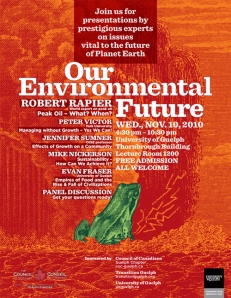


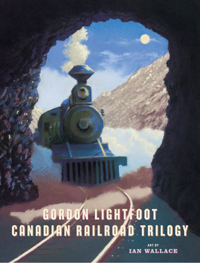







 Community activist Laura Murr joined us on Royal City Rag on October 16 to discuss the real cost of growth.




 Formerly Royal City Rag